



The Fire Analogy: Why Couples Fight About the Smoke, Not the Fire
February 10, 2026
Why Couples Keep Fighting About the Wrong Thing
In couples therapy, one of the most common patterns we see is that partners argue about the surface issue, not the deeper injury. The topic of the fight becomes the focus: logistics, chores, tone, time, phone use, sex, social media, or cheating accusations; when the real pain sits beneath.
"The Fire Analogy" helps make sense of this dynamic.
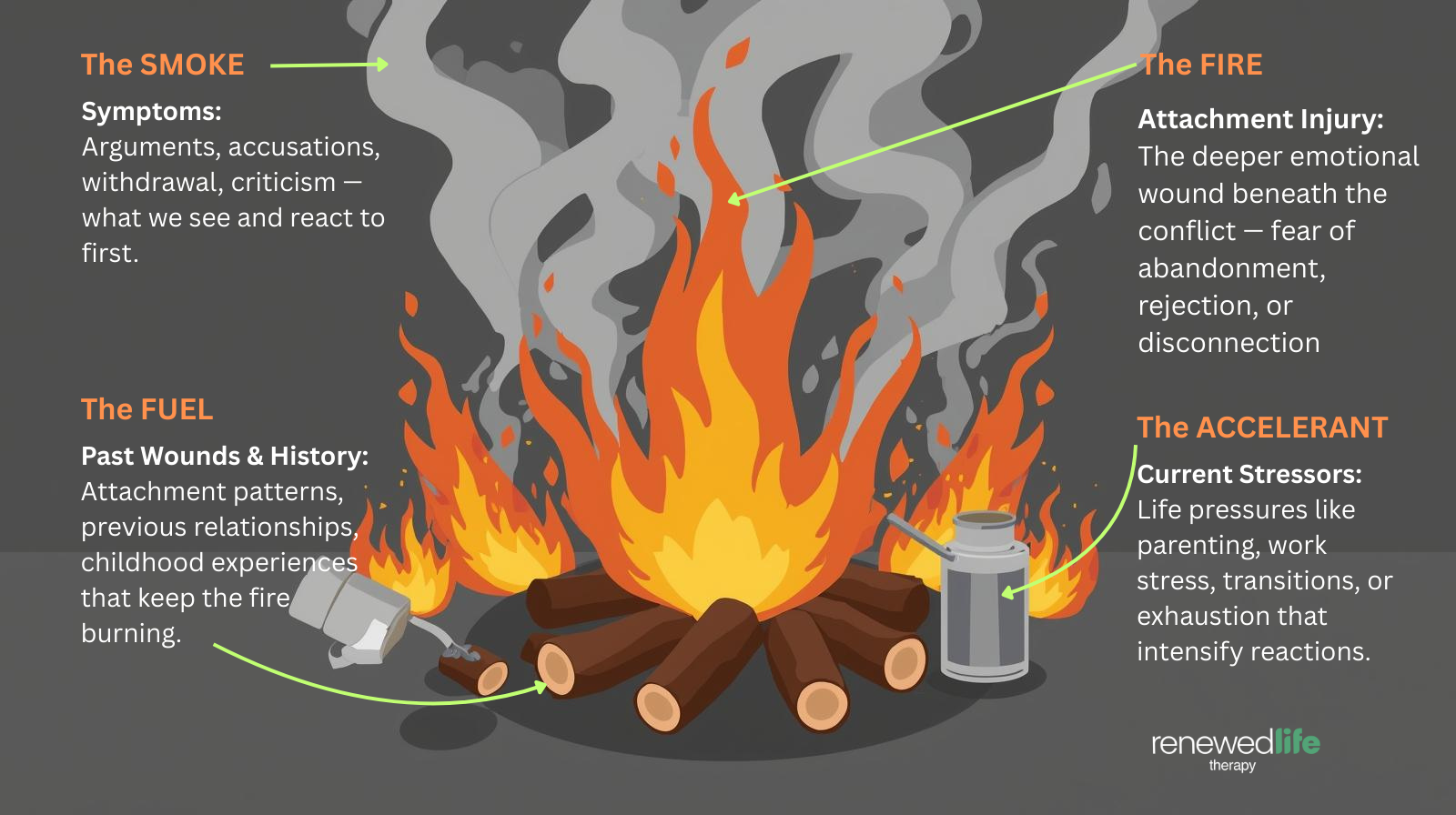
Smoke = The Symptoms of the Relationship
Smoke represents the visible conflict: the part that the partners get stuck arguing about. Smoke is what shows up in session when a couple says:
- “He never listens.”
- “She overreacts.”
- “He’s always on his phone.”
- “She doesn’t trust me.”
- “We keep fighting about the same thing.”
Smoke is irritating, uncomfortable, and attention-grabbing, but smoke is not the source of the problem. You can clear smoke all day, but the room will fill up again if the fire is still burning.
Couples who fight solely at the level of smoke often feel exhausted, confused, and stuck.
The Fire = The Attachment Injury
The fire represents the real wound beneath the conflict: the part that actually hurts. Attachment injuries form when a partner feels abandoned, rejected, dismissed, betrayed, or emotionally left alone; often during vulnerable moments or major life transitions.
The fire is never about the dishes, the phone, or the trip. It’s about questions like:
- “Do you still choose me?”
- “Am I safe with you?”
- “Do I matter?”
- “Will you leave?”
- “Can I trust you?”
When couples do not identify the fire, they engage in fights that feel confusing, circular, and disproportionate to the trigger.
The Fuel = Past Wounds That Feed the Fire
Fuel represents the history each partner brings into the relationship, including:
- childhood attachment wounds
- past relationships or betrayals
- abandonment
- inconsistency
- emotional neglect
- family roles
- past trauma or loss
Fuel does not ignite the fire on its own; but once the fire is lit, it keeps it burning longer and hotter. Without acknowledging fuel, couples tend to personalize reactions that are actually historical.
The Accelerant = Current Stressors
Accelerants are the present-day pressures that intensify conflict, including:
- job stress
- parenting
- illness
- financial strain
- immigration transitions
- grief or loss
- moving
- pregnancy or fertility issues
- career changes
Accelerants do not create the original hurt; they make it harder to regulate it. Under stress, nervous systems regress to old protective strategies: pursuing, shutting down, avoiding, blaming, or withdrawing.
Why Treating the Smoke Doesn’t Put Out the Fire
Partners often try to solve conflict at the level of smoke:
- better communication skills
- more compromise
- scheduling date nights
- dividing chores
- reducing screen time
These can help, but only when the fire has been addressed. Otherwise, the relationship stays in a pattern of repair without resolution. This is why some couples feel like they have “tried everything” yet nothing changes.
A Real-World Example: Cheating Accusations as Smoke
Consider a common scenario in couples therapy:
A wife repeatedly accuses her husband of cheating. There is no evidence, no affair, and no behavior to suggest betrayal. The fights escalate. He becomes defensive or shuts down. She becomes more suspicious and anxious. Both feel misunderstood. To the outside world, the problem looks like:
- trust issues
- jealousy
- control
- insecurity
- communication failure
But that’s the smoke. In therapy, the deeper story emerges:
Six months earlier, after becoming parents, the husband threw himself into work to stabilize finances. The wife, in the thick of postpartum overwhelm, felt alone and emotionally abandoned.
The fire wasn’t cheating. The fire was an attachment injury; “When I needed you most, I felt like you left me.” The fuel was her earlier history of inconsistent caregivers and a past partner who cheated during a vulnerable time. The accelerant was sleep deprivation, financial stress, and parental transition.
Her accusations were not about betrayal, they were about fear of abandonment.
His defensiveness was not about secrecy, it was about shame for failing as a partner and not knowing how to repair it.
Once the fire was identified, the couple could stop arguing about fidelity and start addressing the injury:
- What was missed?
- Where was the pain?
- What did she need then?
- What does she need now?
- How can he show up differently?
- How can she repair before accusing?
Smoke clears quickly when the fire is treated.
A Gentle Reframe
Most couples are not fighting about the wrong thing because they don’t care. They are fighting about the wrong thing because it feels safer than naming the vulnerability underneath.
Smoke is loud. Fire is tender.
At Renewed Life Therapy, we help couples move beyond symptom-based conflict and toward the deeper attachment wounds that drive disconnection. When the fire is understood and tended to, repair becomes possible, trust can be rebuilt, and fights lose their intensity. You may also find it helpful to read “What Is Intimacy?” or “Ways Disconnection Shows Up in Relationships.”
Looking for something specific? Search our blogs and resources
QUICK LINKS